
When Global Supply Hubs Fail: Emergency Logistics in East Africa

The disruption to Dubai's Jebel Ali humanitarian supply hub in early 2026 gave NGO logistics officers across the world an uncomfortable lesson about supply chain geography. Equipment and supplies pre-positioned at what had become the sector's most relied-upon global staging node were effectively frozen as geopolitical instability in the Strait of Hormuz choked shipping lanes. For organisations managing emergency logistics in Africa — where response windows are measured in days, not weeks — this was not an abstract risk scenario. It was an operational crisis, and it is still unfolding.
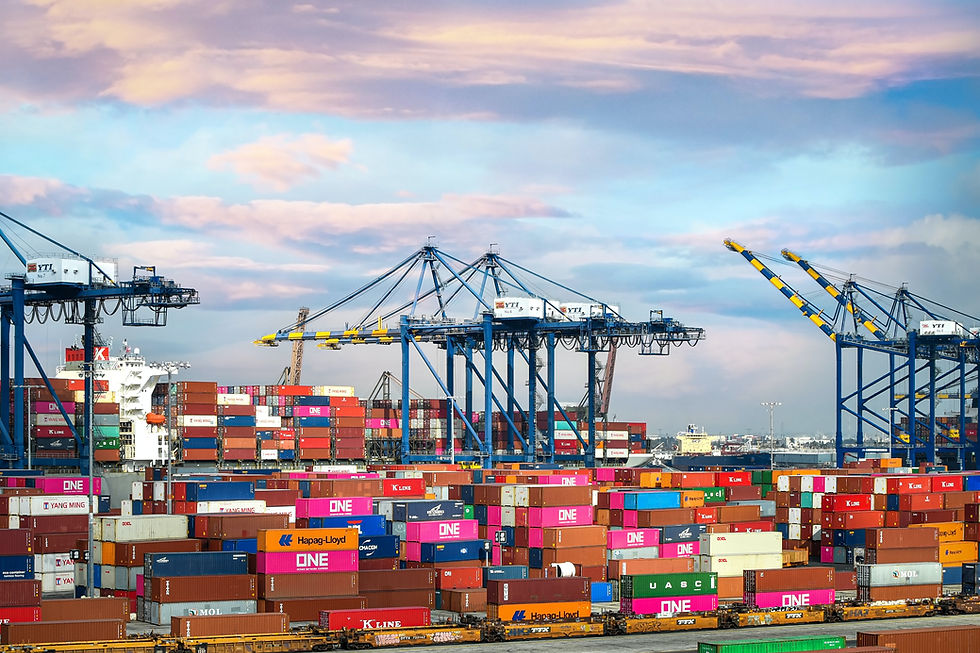
What the Dubai Supply Disruption Revealed About Emergency Logistics in Africa
Reporting in The New Humanitarian noted that Dubai Humanitarian — which maintains pre-positioned stocks for response operations across Africa, the Middle East, and Asia — dispatched just $3 million worth of humanitarian goods in March 2026, compared to $8 million in the same month in 2025: a fall of over 60 percent. NPR reported in April 2026 that medical supplies and therapeutic foods were stuck at Jebel Ali Port, with Save the Children colleagues in the field warning that stocks at supported clinics were dwindling with no clear timeline for release.
The organisations affected had not made poor decisions. Many had deliberately diversified their inventory toward Dubai because it offered geographic spread and faster shipping to East and Central Africa than European hubs. That logic was sound — until a single chokepoint in global shipping made the entire model fragile at exactly the moment it was most needed. The disruption exposed a structural truth that applies far beyond this particular crisis: when your supply chain runs through a single global hub, the risk profile of that hub becomes your organisation's risk profile.
This matters especially for emergency logistics in Africa. Whether you are responding to a cholera outbreak in South Sudan, a flood emergency in eastern DRC, or a drought crisis in the Horn, the first 72 hours of response determine whether communities receive treated water and basic WASH supplies at the onset of an emergency or weeks into it. A supply chain routed through a compromised global hub — regardless of the reason — cannot deliver in that window.
How Global Routing Left NGO Field Teams Exposed
The Dubai crisis arrived on top of a procurement landscape already under severe strain. The closure of USAID in mid-2025 removed a supply chain infrastructure that had, for decades, underpinned the movement of WASH equipment, NFIs, and emergency medical supplies into East and Central Africa. NGOs that had relied on USAID-funded supply pipelines found themselves rebuilding procurement from scratch, often with reduced budgets and shorter funding cycles.
Against that backdrop, many organisations turned to whatever global sourcing infrastructure remained available — including Dubai. What the Jebel Ali disruption has demonstrated is that the sector cannot simply swap one centralised global model for another. A European hub, a Dubai hub, or any single consolidation point carries systemic vulnerability. And for emergency logistics in Africa — where the operating environment is already defined by insecurity, road conditions, customs delays, and rainy-season access constraints — adding a geopolitical chokepoint at the supply end compounds every other risk.
Lead times tell the story clearly. Procurement routed from a European supplier through Dubai to Juba or Goma can run to six to twelve weeks under normal conditions. From a regional supplier with stock already in Kampala or Juba, the same order can be fulfilled in two to seven days. In a cholera response or flood emergency, that difference is not logistical. It is epidemiological. Communities that receive Aquatabs and oral rehydration supplies at the onset of an outbreak experience dramatically different outcomes than those that receive them three weeks later.
The Case for Pre-Positioned Emergency Logistics Stock in East Africa
Pre-positioning humanitarian stock in the operational region has always been recognised as best practice. What the current supply chain environment has done is move it from best practice to near-requirement. The combination of USAID procurement disruption, the Dubai hub paralysis, and a humanitarian caseload that UNHCR projects will reach 136 million forcibly displaced people by the end of 2026 means that organisations without a regional supply relationship are carrying a response gap they may not be able to close when it matters most.
At SLS, we maintain pre-positioned stock across our Juba and Kampala facilities. This includes Aquatabs water purification tablets, P&G Purifier of Water sachets, Oxfam bladder tanks, and full emergency WASH kits — the core consumables and storage equipment that define the first-week response to almost any WASH emergency. It also includes Multiquip and Aussie pump sets for flood dewatering and high-volume water transfer, available for rapid dispatch into South Sudan, Uganda, DRC, and beyond.
The logic of pre-positioning is straightforward: when stock is already in-country or at a regional hub inside the corridor where you operate, lead times collapse and customs clearance is already handled. You are not waiting for a purchase order to be processed in Geneva, a container to clear Mombasa, and a truck convoy to navigate road conditions between the coast and the field. You are drawing on inventory that is already positioned for the operating environment you are working in.
What NGO Logistics Officers Should Do Now
The practical question for any NGO logistics officer reviewing their supply chain after the Dubai disruption is not whether to shift toward regional pre-positioning, but how quickly. We would suggest four immediate actions.
First, audit your current supply chain geography for WASH consumables, emergency pumps, and NFI kits. Map exactly where each category of stock sits before it reaches your field locations and identify how many global chokepoints it passes through. Second, identify which of your existing supplier relationships involve genuine in-country or regional pre-positioning — and which involve a supplier simply claiming regional presence while routing stock through a distant hub. The distinction matters enormously when access windows close. Third, review your framework agreements for response time guarantees. A supplier unable to commit to delivery within seven days from in-region stock for priority WASH items is not a reliable emergency supplier, regardless of price. Fourth, pre-qualify at least one regional supplier with documented stock in your primary operational corridor before the next emergency requires it. Pre-qualification during a stable period costs nothing. Discovering a gap when a response has already started costs a great deal more.
The humanitarian sector has spent two years absorbing successive shocks to its procurement infrastructure — USAID cuts, funding shortfalls, and now a global supply hub paralysis. The organisations that will maintain operational continuity through the next shock are those that have built a supply chain geography anchored in the region where they work. If you are reassessing your logistics approach for East or Central Africa, contact SLS to discuss how we can support your supply chain with pre-positioned regional stock across the corridors that matter to your operations.
Comments