
Aussie Pumps for Flood Response and Infrastructure Protection in South Sudan
- Tony Miller
- Dec 1, 2025
- 5 min read

Introduction: High-Volume Pumping for a High-Risk Environment
In South Sudan, flooding is no longer an occasional emergency; it is a recurring, structural risk that shapes how humanitarian and government operations are planned. Keeping airstrips operational, protecting warehouses, and maintaining access to communities all depend on one critical capability: moving very large volumes of water, fast.
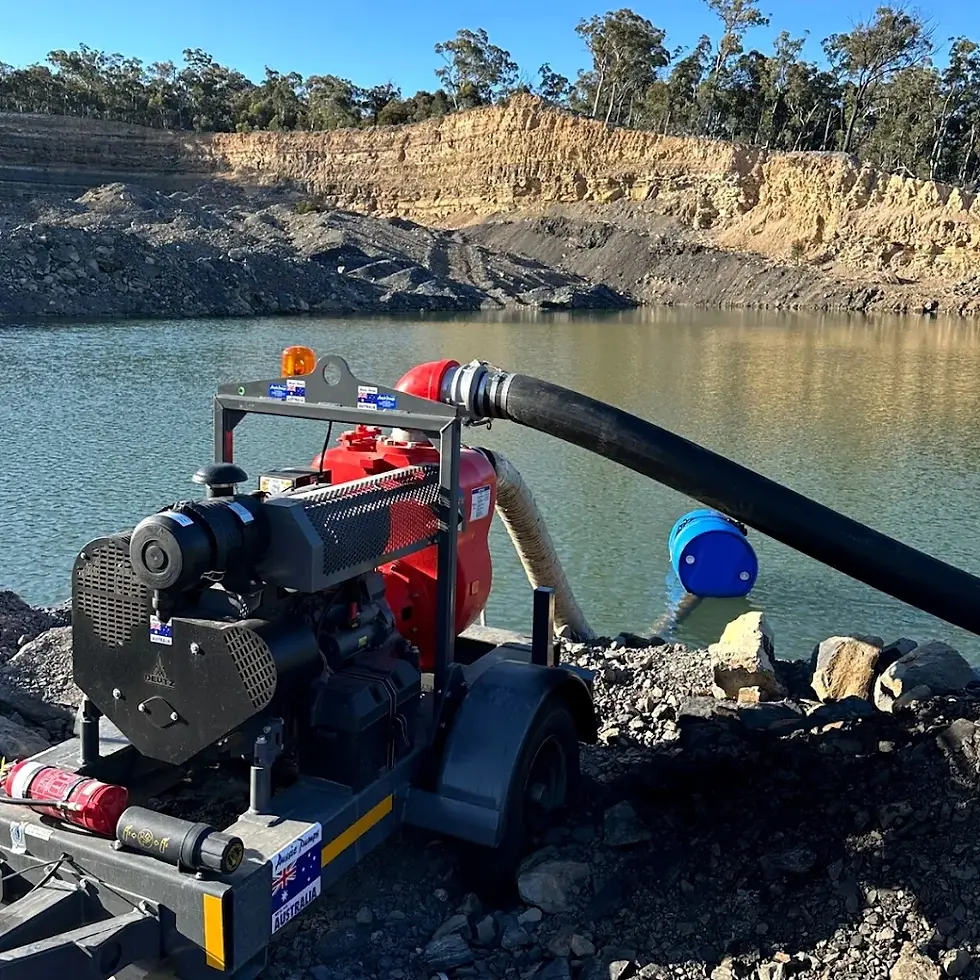
This is where Aussie Pumps stand out. As part of the Specialized Logistics Solutions (SLS) pump portfolio, Aussie Pumps provide high-capacity, heavy-duty flood mitigation capability that complements Multiquip and other units in an integrated pump strategy.
Why Aussie Pumps Matter in South Sudan
Flood events in South Sudan often involve:
Extensive surface water covering large compounds, airstrips, and access roads
High sediment and debris loads in drainage channels and low-lying areas
Prolonged inundation, where water remains for weeks or months without intervention
In these conditions, standard light-duty pumps are quickly overwhelmed. Aussie Pumps are designed specifically to address:
Very high flow requirements, where hundreds of thousands of litres must be moved per hour
Continuous operation in harsh environments
Debris-laden water, typical of flooded fields, drainage ditches, and peri-urban areas
For NGOs, UN agencies, and government institutions, this translates into a strategic asset for large-scale dewatering and flood defence.
You can explore the broader pump portfolio here: Pumps and Pump Equipment.
Key Characteristics of Aussie Pumps in Humanitarian Operations
1. High Flow Rates for Large-Scale Dewatering
Aussie Pumps are engineered for very high flow outputs, making them suitable for:
Dewatering large compounds and logistics hubs
Protecting airstrips and helipads where standing water threatens aviation operations
Managing water around towns and peri-urban areas during peak flood events
High flow capacity reduces the time required to bring critical infrastructure back into operation, directly impacting response speed and access continuity.
2. Robust Trash-Handling Capability
Floodwater in South Sudan is rarely clean. It often carries:
Silt, mud, and fine sediments
Organic matter (grass, leaves, crop residues)
Solid debris from damaged infrastructure
Aussie trash pumps are designed to handle this high solids load with:
Heavy-duty impellers and casings
Large passageways to reduce clogging
Serviceable designs that allow field teams to clear blockages and perform basic repairs
This makes them suitable for open drainage channels, flooded access roads, and protective bunds around critical facilities.
3. Durability and Field Maintainability
In remote and high-risk environments, pumps must withstand:
Rough handling during loading, offloading, and repositioning
Extended run times with limited workshop support
Variable fuel quality and challenging operating conditions
Aussie Pumps are built with rugged frames, quality engines, and accessible components, enabling:
Field-level maintenance by trained operators
Long service life under demanding conditions
Reduced downtime, even when spare parts supply lines are stretched
Operational Use Cases for Aussie Pumps in South Sudan
1. Flood Response and Site Protection
Aussie Pumps are particularly effective in large-scale flood operations, including:
Protecting logistics hubs and modular warehouses from encroaching floodwaters
Dewatering airstrips, taxiways, and apron areas to maintain aviation access
Draining large compounds and buffer zones around humanitarian bases and UN sites
By deploying Aussie Pumps as part of a pre-planned flood response strategy, organisations can shorten downtime and maintain continuity of operations during peak flood seasons.
2. Support to Displacement Sites and Community Protection
In and around displacement sites, Aussie Pumps can be used to:
Create and maintain drainage corridors that divert water away from shelters and communal facilities
Reduce standing water that contributes to vector breeding and public health risks
Support emergency reconfiguration of sites, where new drainage lines must be opened quickly
When combined with Multiquip medium-capacity pumps and submersible units, Aussie Pumps provide the high-volume backbone for layered site drainage strategies.
3. Infrastructure and Road Protection
Seasonal flooding frequently disrupts road networks and small civil structures. Aussie Pumps can support:
Emergency works on causeways, culverts, and low-lying road segments
Dewatering of construction and maintenance sites for small bridges and crossings
Protection of access routes to key humanitarian hubs and border points
This capability is particularly valuable where road access underpins the entire supply chain for WASH items, NFIs, and food assistance.
Integrating Aussie Pumps into a Comprehensive Pump Strategy
Aussie Pumps are most effective when they are not used in isolation, but as part of a structured pump portfolio:
Aussie Pumps: High-capacity, large-area dewatering and flood defence
Multiquip dewatering and trash pumps: Medium-scale site and compound dewatering
Submersible pumps: Confined spaces, pits, and localised problem areas
SLS works with partners to design tiered pump strategies that match equipment to:
Risk profiles (high-risk flood zones vs. moderate-risk sites)
Critical infrastructure (airstrips, warehouses, health facilities, camps)
Available power sources and fuel logistics
This ensures that each pump type is deployed where it delivers the greatest operational impact.
Practical Selection and Deployment Considerations
When specifying Aussie Pumps for South Sudan operations, SLS supports partners to consider:
Required flow rate and pumping distance
Elevation changes and discharge head
Expected solids load and water quality
Deployment model (fixed at a site vs. mobile, shared asset)
Key planning elements include:
Fuel supply and storage, aligned with expected run times
Spare parts and consumables, pre-positioned to match deployment duration
Operator training, covering safe start-up, shutdown, monitoring, and basic troubleshooting
By addressing these factors upfront, organisations can reduce the risk of operational failure at critical moments.
Compliance, Quality, and Donor Assurance
As with all equipment supplied by SLS, Aussie Pumps are integrated into a broader framework of quality and compliance:
Equipment is ISO-compliant and aligned with WHO and UN agency requirements
Technical specifications and documentation are available for tenders, audits, and donor reporting
Pump selection is guided by field experience in South Sudan and neighbouring countries
This helps procurement and technical teams justify pump investments within institutional and donor frameworks.
The SLS Advantage: Aussie Pumps Plus Regional Logistics
What differentiates SLS is the combination of high-performance equipment and specialised logistics:
Regional presence in South Sudan, Uganda, and Kenya
Established networks for air, road, and river transport
Experience in conflict-affected and flood-prone areas, including last-mile delivery
Integrated offerings that combine Aussie Pumps with Multiquip units, Butyl tanks, WASH products, and modular warehouses
This allows NGOs, UN agencies, and government institutions to work with a single partner from specification and procurement through to delivery, deployment, and ongoing support.
You can learn more about SLS’s broader portfolio here:
Conclusion: Aussie Pumps as a Cornerstone of Flood Resilience
In South Sudan’s evolving flood landscape, high-capacity pumping is a cornerstone of operational resilience. Aussie Pumps provide the volume, robustness, and field maintainability required to protect critical infrastructure, sustain humanitarian access, and support communities during prolonged inundation.
By integrating Aussie Pumps into a tiered pump strategy alongside Multiquip and submersible units, and by leveraging SLS’s regional logistics and technical support, organisations can move from reactive flood response to planned, system-based flood management.
For actors planning their next flood season or reviewing contingency plans, positioning Aussie Pumps as a core element of flood mitigation and infrastructure protection is a practical step toward more reliable, resilient operations.
Comments